School’s out! The summer holiday can offer new opportunities for adolescents to explore, take healthy risks, and learn by experiencing the world around them—maybe by attending a summer camp, going to the park with a new group of friends, or trying out a new hobby. For this Research Roundup, we highlight research published in the last year that focuses on exploration during adolescence and the role of our natural environments in our development.
Sign up to receive the quarterly Research Roundup in your inbox. You can suggest research articles for future roundups by emailing CDA@psych.ucla.edu.
In this Roundup:
- Engaging with Nature Benefits Adolescent Development, February 2026
- Adventuring and Taking Risks in Nature Enhances Adolescent Well-being, January 2026
- Summer Camps Can Help Adolescents Boost Their Mental, Emotional, and Social Health, February 2026
- Adolescents Use Exploration to Learn About Their Environments and Make Informed Decisions, March 2026
Engaging with Nature Benefits Adolescent Development
(Contact with Nature and Youth Well-Being: Insights from Natural and Urban Contexts, Current Opinion in Psychology, February 2026)

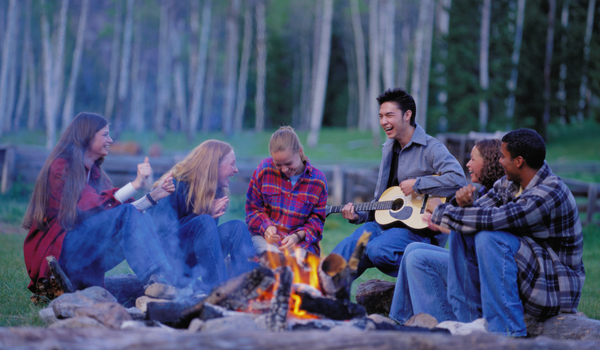
Spending more time in nature can support positive development for adolescents, according to a review of nature-based interventions. In this review paper, Martina Olcese and colleagues examined research that links contact with nature to healthy outcomes in children and adolescents. Researchers found that interventions that provide opportunities for youth to engage with natural environments (such as forests) improve self-esteem, emotion regulation, physical health, and social skills. They noted similar benefits of nature-based programs in urban contexts (such as in green spaces), which increase youth’s sense of belonging, strengthen their civic engagement, and enhance their sense of purpose. Crucially, the researchers note that these nature-based experiences are most beneficial when young people are given agency to actively shape the activities and reflect on their experiences.
Why this is important:
This research highlights the importance of interacting with the natural environment during adolescence. By reviewing intervention programs, the researchers find that nature-based programs—in particular, ones that involve youth in their design and implementation—can promote healthy development, social engagement, and community belonging in adolescents.
Adventuring and Taking Risks in Nature Enhances Adolescent Well-being
(Risky Outdoor Play and Adventure Education in Nature for Child and Adolescent Well-being: A Scoping Review, Behavioral Sciences, January 2026)
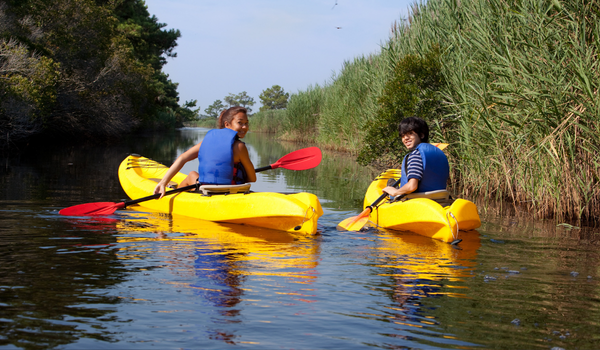
Participating in adventurous outdoor activities gives us opportunities to take risks, challenge ourselves, and learn by experiencing the world around us. To better understand the developmental benefits of outdoor adventures, Tonia Gray and colleagues reviewed 40 empirical studies measuring outcomes associated with nature-based risky play and adventurous outdoor activities such as climbing, kayaking, fire building, or tree climbing in children and adolescents. Researchers found that, across ages, location, and program types, youth benefited from participating in adventurous outdoor activities. The benefits were vast: participation was linked to enhanced mental health, confidence, self-empowerment, and social and emotional skills, as well as stronger relationships. Importantly, they found that choice, autonomy, and agency were an integral part of generating these positive outcomes. While youth of all ages benefited from having agency to make their own decisions in their adventures, adolescents explicitly noted that they valued having freedom in their choice of activities.
Why this is important:
This review paper summarizes the wide-ranging benefits of providing adolescents opportunities to explore and take positive risks in their natural environments. Notably, the researchers emphasize that authentic youth agency is key to ensuring that these experiences benefit adolescent well-being.
Summer Camps Can Help Adolescents Boost Their Mental, Emotional, and Social Health
(The Influence of Structured Nature Experiences on Youth Mental, Emotional, and Social Health Competencies in Summer Camps: A Systematic Review, Behavioral Sciences, February 2026)
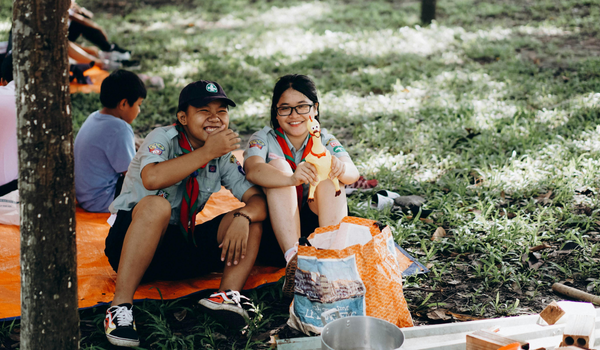
Summer camps provide opportunities for adolescents to explore their natural environment while building community. In this review paper, Daniela Berry and colleagues synthesized recent findings on the benefits of intentionally designed outdoor activities (“structured nature experiences”) in youth summer camps. Across the 21 studies reviewed, they found that the structured nature experiences provided by summer camps such as ropes courses, kayaking, and hiking support mental, emotional, and social health in children and adolescents. The camp experiences reviewed were found to increase campers’ self-esteem, sense of purpose, social belonging, and communication skills. Additionally, structured nature experiences were found to improve campers’ ability to regulate their emotions, handle stress, and navigate challenges. Notably, these benefits were present across a wide range of summer camps, including both day and overnight camps and camps designed for specific populations, such as youth with health challenges and youth who had experienced trauma. Together, this review highlights the benefits to mental, emotional, and social health that can result from participation in summer camps for youth across diverse populations.
Why this is important:
During adolescence, we are motivated to explore novel environments and are especially skilled at learning from new experiences. Structured nature experiences within summer camps can offer supportive, scaffolded opportunities for adolescents to learn from experience and ultimately benefit their mental, emotional, and social health.
Adolescents Use Exploration to Learn About Their Environments and Make Informed Decisions
(Structure Inference in Complex Environments Improves From Childhood to Adulthood, Developmental Science, March 2026)
During adolescence, we get better at using exploration to learn about the world around us, according to new research led by Nora Harhen and colleagues. In a study of 252 participants ages 8 to 25, participants played a computerized game where they explored a series of planets in search of gems, with the goal of mining as many gems as possible. To do well in the game, participants had to determine whether the planet they were currently visiting was rich in gems—in which case, they should stay and keep mining there—or whether they should leave and visit another planet that could potentially yield more gems. In other words, they needed to explore strategically and use what they learned about their environments to guide their decisions. They found that, relative to younger participants, older adolescents were more skilled at using the information they gained through exploration to make optimal choices in the game. Specifically, although children and younger adolescents also strategically explored the different planets, older adolescents were more likely to use what they learned from exploring to figure out which planets were the richest in gems, and to spend more time mining in these rich planets.
Why this is important:
This study provides evidence that exploration is adaptive, enabling us to not only learn about our environments, but also to make informed choices based on what we have learned. This work suggests that the ability to strategically use exploration to learn and make informed decisions strengthens during adolescence. Together, these findings suggest that providing adolescents with safe and engaging ways to explore the world around them can help them to learn and make informed decisions based on their experiences.
Additional Resources About Exploration

Exploration & Risk Taking
Learn more about Exploration & Risk Taking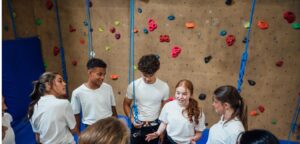
5 Facts About Exploration and Risk Taking in Adolescence
Learn more about 5 Facts About Exploration and Risk Taking in Adolescence